
Farmer Testimonials
Neville Porteous
For Neville and Ainsley Porteous, building a profitable and resilient dairy system has been about matching cow numbers to seasonal pasture growth as well as what their soils can realistically carry through winter and using supplements strategically to ensure cows are well fed year-round.
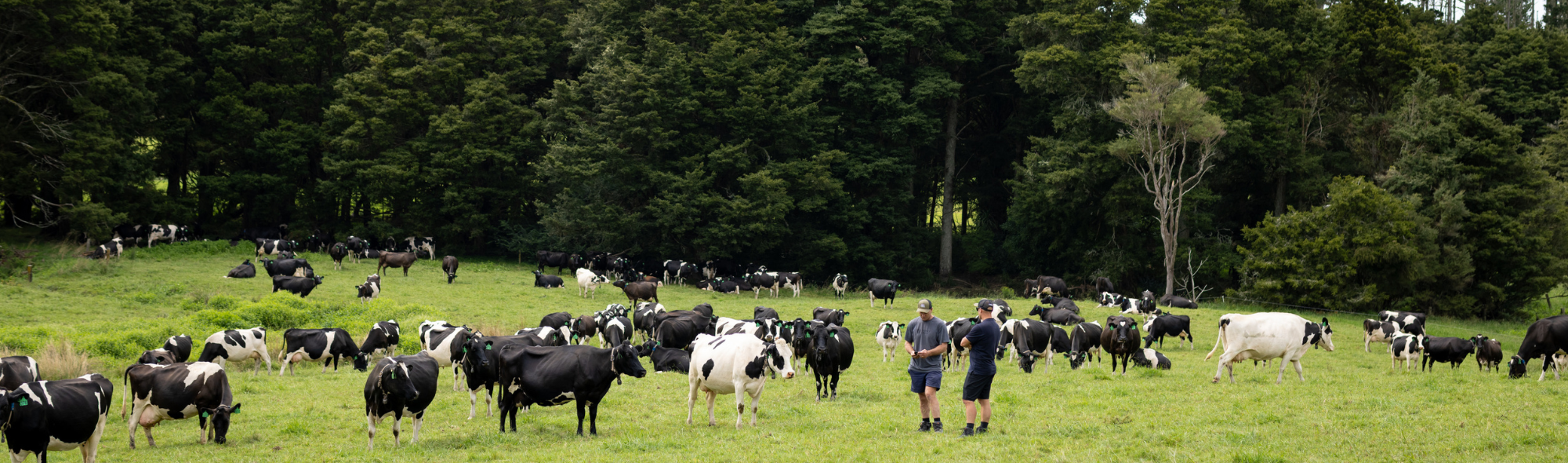
The Porteous family’s 135-ha effective farm is situated at Te Ārai, around 10 minutes east of Wellsford. At peak, they milk around 370 predominantly Friesian or Friesian-cross cows. The herd is structured around split calving, with approximately 310 cows calved in the autumn and around 70 in the spring, a system designed to reduce pressure through the wettest months.
“We’re really focused on getting those cows through the winter by utilising a feedpad to minimise pasture damage and set up for when the pasture growth rates increase at the end of September” says Neville.
Neville has tested different calving strategies over time. While the farm previously ran a more evenly split system and later moved to total autumn calving, several very wet winters, combined with Cyclone Gabrielle, highlighted the limits of that approach on heavier soils.
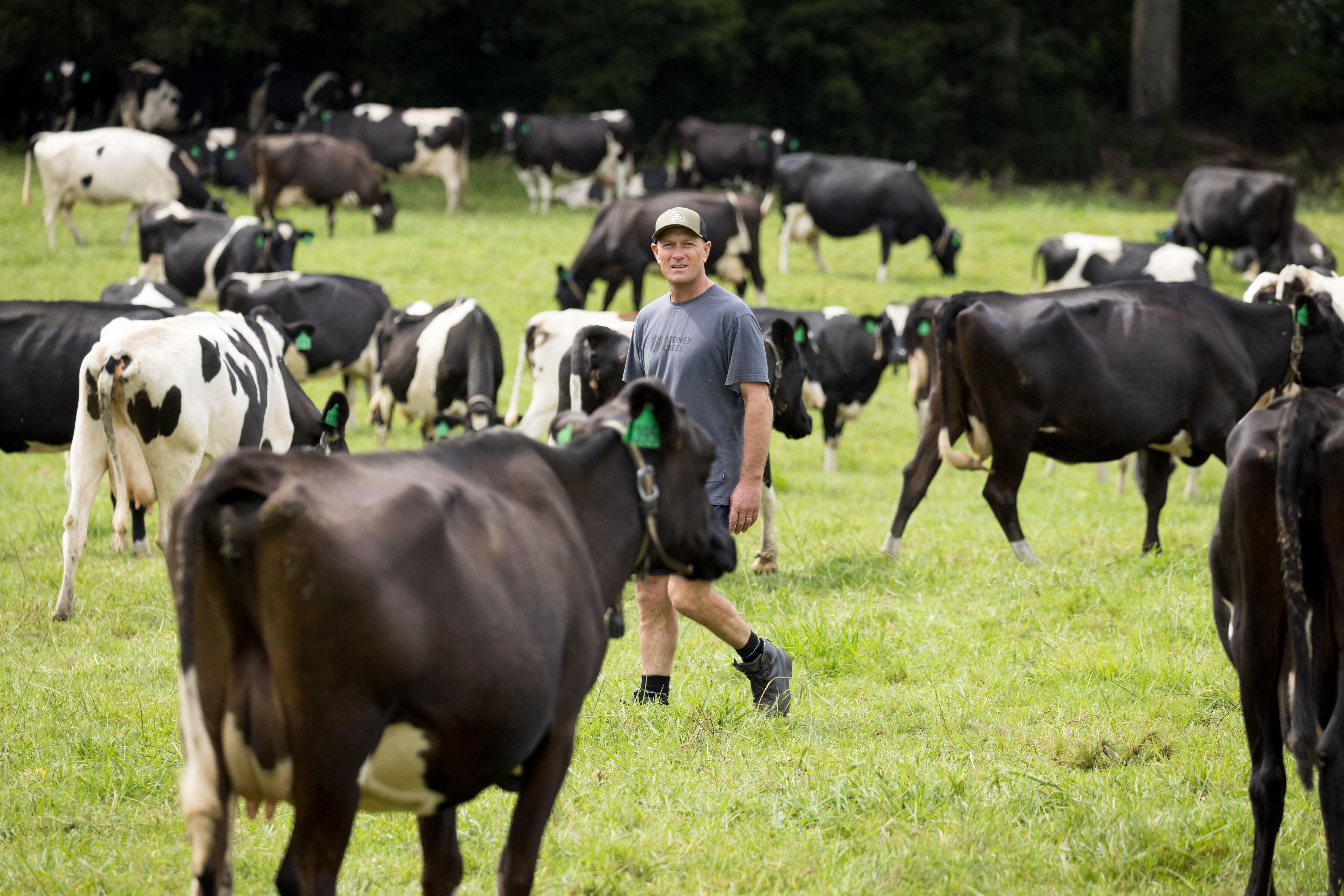
“We went to all autumn calving for a couple of years” Neville explains. “But after a couple of really wet winters, it just put too much pressure on the system”.
The current split-calving model has proven a better fit, allowing winter cow numbers to be held at a level the farm can comfortably support while retaining production flexibility.
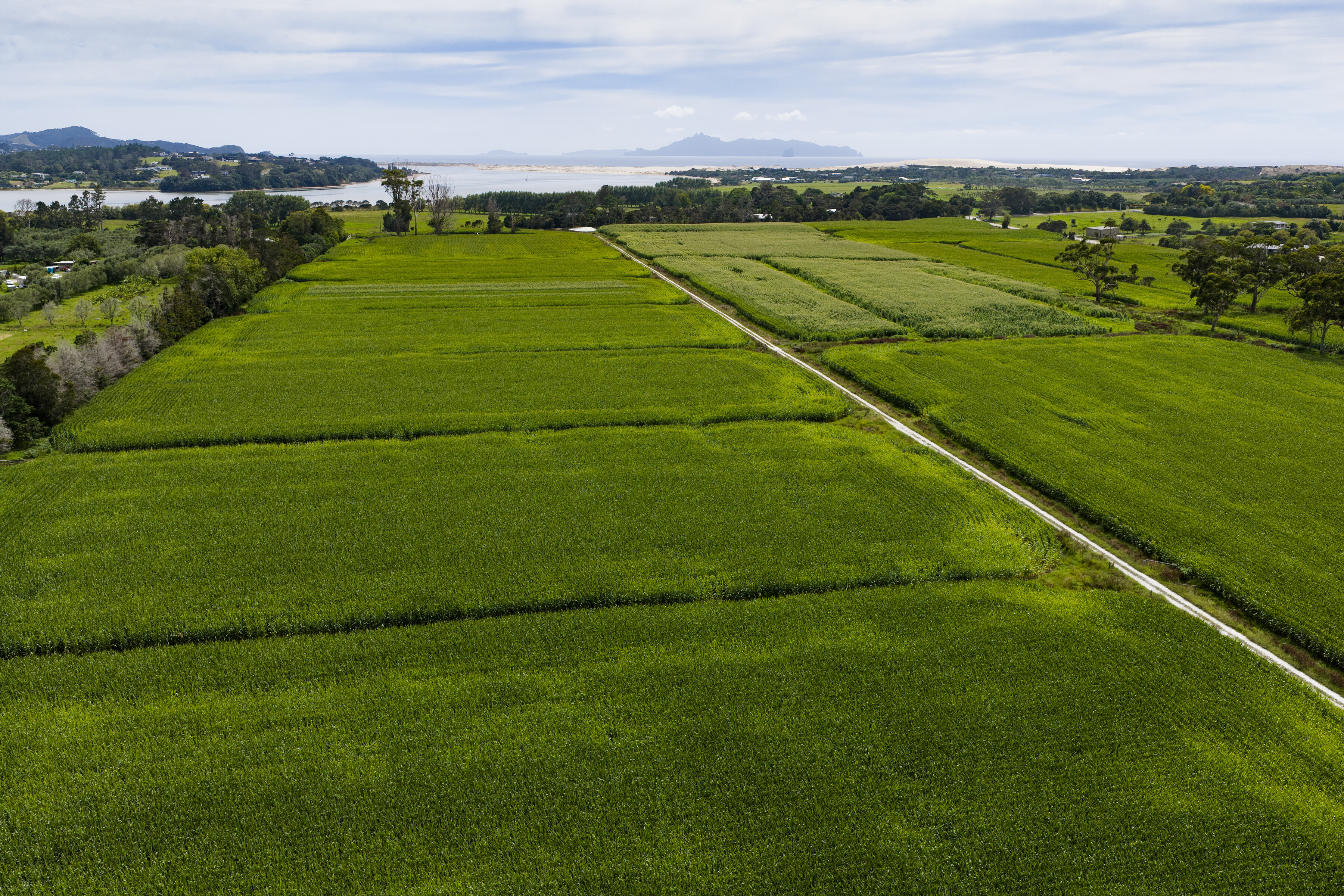
Crops are established using traditional cultivation, including ripping and power harrowing. In recent seasons, the maize planting date has been shifted to the first week of November to improve establishment success, while also allowing an extra grass silage cut beforehand.
Harvest typically occurs in mid-March, enabling pasture to be re-established ahead of winter.
Hybrid selection starts by identifying the right maturity. Neville avoids very long-maturing hybrids that delay regrassing on his heavier soils, but also steers away from very short-season hybrids that have a lower yield potential.
“We’re looking for something middle of the road, with reasonable grain content”.
In recent seasons, Neville has planted Pioneer® brand P0900 following earlier success with other AQUAmax® hybrids.
Once feed-out begins, Neville places great emphasis on maintaining maize silage quality and reducing losses.
“We’re very particular with our stack management. We only feed what we break off the face. We don’t leave loose maize sitting there warming up”.
The farm runs Allflex activity collars across the herd, supporting a full artificial insemination breeding programme with no bulls on the property. Six weeks of mating are used for the autumn herd, with a short three-week mating period for spring calvers.
“We don’t rear any replacements from the spring herd so some cows shift from the autumn herd to the spring herd to keep up the numbers” says Neville. “Anything that is empty from the spring herd leaves the farm”.
“We’ve gone away from bulls completely; it just makes the system simpler”.
The farm’s replacement policy is equally straightforward. Around 80 Friesian replacements are reared each year from the autumn herd, with all Friesian heifer calves retained. Lower-performing cows are mated to beef breeds, including Charolais and Hereford, and surplus calves are sold through the local saleyards.
A simple yet disciplined management system that plays to the farm's strengths helps drive on-farm efficiency. A Fonterra analysis shows that around 55 per cent of feed eaten on the farm is converted into milk, compared with a benchmark Northland System 4 group average of approximately 48 per cent. Production per kilogram of liveweight sits at around 87 per cent. Homegrown feed production averages around 11.2 tDM/ha, compared with approximately 8.2 tDM/ha for the 100 closest farms.
Dairy farming has been a lifelong career for Neville, and he continues to enjoy the variety it offers.
“I like the fact that every day is different and you are not doing the same repetitive job. You might be plumbing or fixing machinery, managing pastures, working with livestock or chopping down trees”.
At its core, Neville’s motivation remains grounded in his herd.
“I like seeing cows happy and well fed in the paddock. When they’re producing well, it makes you feel like you’re looking after them properly”.