
Farmer Testimonials
Dave and Alice Swney
For more than 30 years maize silage has underpinned the profitability and sustainability of Waikato-based Ivondale farm.
The original 43 ha farm located at Te Kawa, just south of Te Awamutu, was purchased by Phill and Deb Swney in 1990 and was slowly expanded through the lease and purchase of adjoining land.
The current 123 ha (eff) dairy operation is run by son Dave and his partner Alice Trevelyan who own 50% of the assets and contract milk for the business.
In the 2023-24 season, the 410-cow crossbred herd produced 189,500 kgMS, equating to 1,541 kgMS/ha or 462 kgMS/cow. Farm working expenses were $5.85/kgMS and the property had an operating profit of $4,893/ha.
This season (2024-25) the farm is on track to produce just over 200,000 kgMS from 410 cows.
Dave, who was a DairyNZ Consulting Officer for five years, counts himself lucky to have come home to a farm with good infrastructure and a well-bred Friesian x Jersey (F8J8) herd.
“Dad bred an amazing herd of big black crossbreds that combine the best of both breeds” says Dave. “We feel really lucky to be able to carry the genetics on”.
Determined to increase production and believing feeding level and nutritional balance were the key, Dave’s father Phill started using maize silage to complement pasture in the early 1990’s. Today, the farm feeds around 1 tDM maize silage per cow.
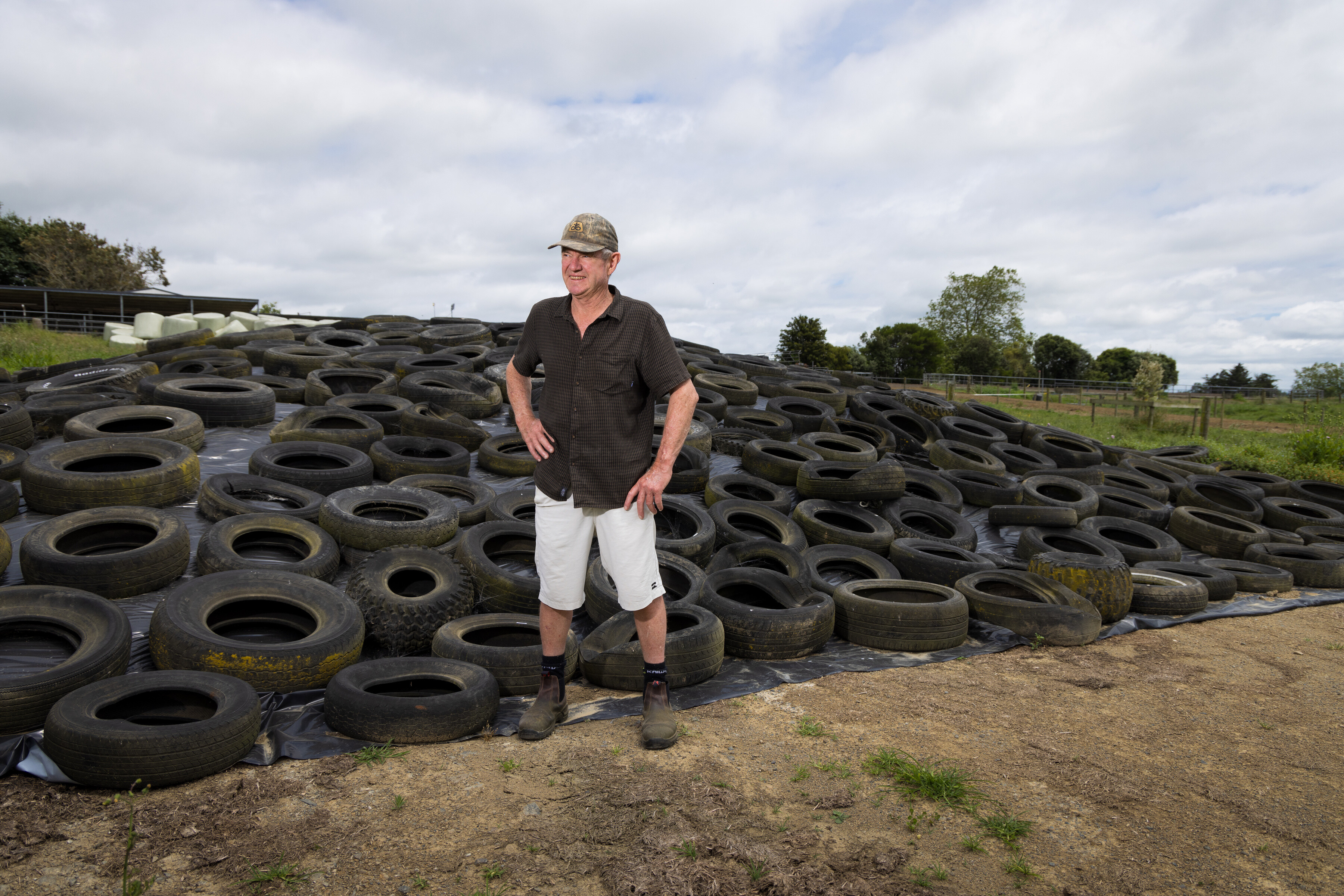
Each year, Dave purchases 12 ha of maize silage from local contractor John Austin Ltd’s lease block across the road. After maize silage harvest, the entire block (28 ha) is planted into annual ryegrass and Dave subleases it to winter the cows and to make grass silage.
A further 10 ha of maize is grown on farm under a strip-till system. This season half of the home crop has been grown on the effluent area with very low fertiliser inputs.
“Using a combination of growing maize silage on farm and buying it in gives us all the feed we need while diluting the average cost”.
The Swneys have grown Pioneer® brand maize hybrids for more than 30 years and appreciate the long term relationships they have with their local Pioneer representatives as well as John Austin over that time.
When it comes to maize silage, they are looking for silage quality as well as a reliable yield.
“We take a sample out of every stack and carefully analyse the results” says Dave. “A key goal is to maximise the starch content of our maize silage and there is a significant difference between hybrids. We like the quality of the maize silage we get from P0900”.
For supplementary feeding, the farm relies solely on a 220-cow feedpad and a recently purchased mixer wagon.
“The feedpad is an essential part of our farm system and the mixer wagon has been a great addition because it has allowed us to get a more even distribution of minerals” says Dave. “You have to invest in the right tools if you want to push production and profit”.
Calves remain on the farm until the 1st of May and are grazed off for 12 months, returning home before their first calving at the start of July.
The main herd starts calving on the 10th of July. To minimise the risk of metabolic disease, springers are fed a maize silage-based diet that includes palm kernel, molasses, straw, anionic minerals, and a “sniff” of pasture.
“Because we are calving so early, we feed high amounts of supplementary feed to start with and slowly ease off once the grass starts growing” says Dave. “We typically don’t make any pasture silage on farm; we are stocked high enough that we eat all the grass we can grow”.
Cows normally peak at around 2.3 kgMS/cow on a diet that comprises maize silage, palm kernel and pasture.
The cows are run in two herds. In past seasons, the young herd has been once-a-day all season. This has helped overcome historic lameness issues due in part to the large walking distance on a long, skinny farm.
“The furthest paddock is 2.2 km from the cow shed” says Dave. “It burns up a lot of energy walking that far twice daily”.
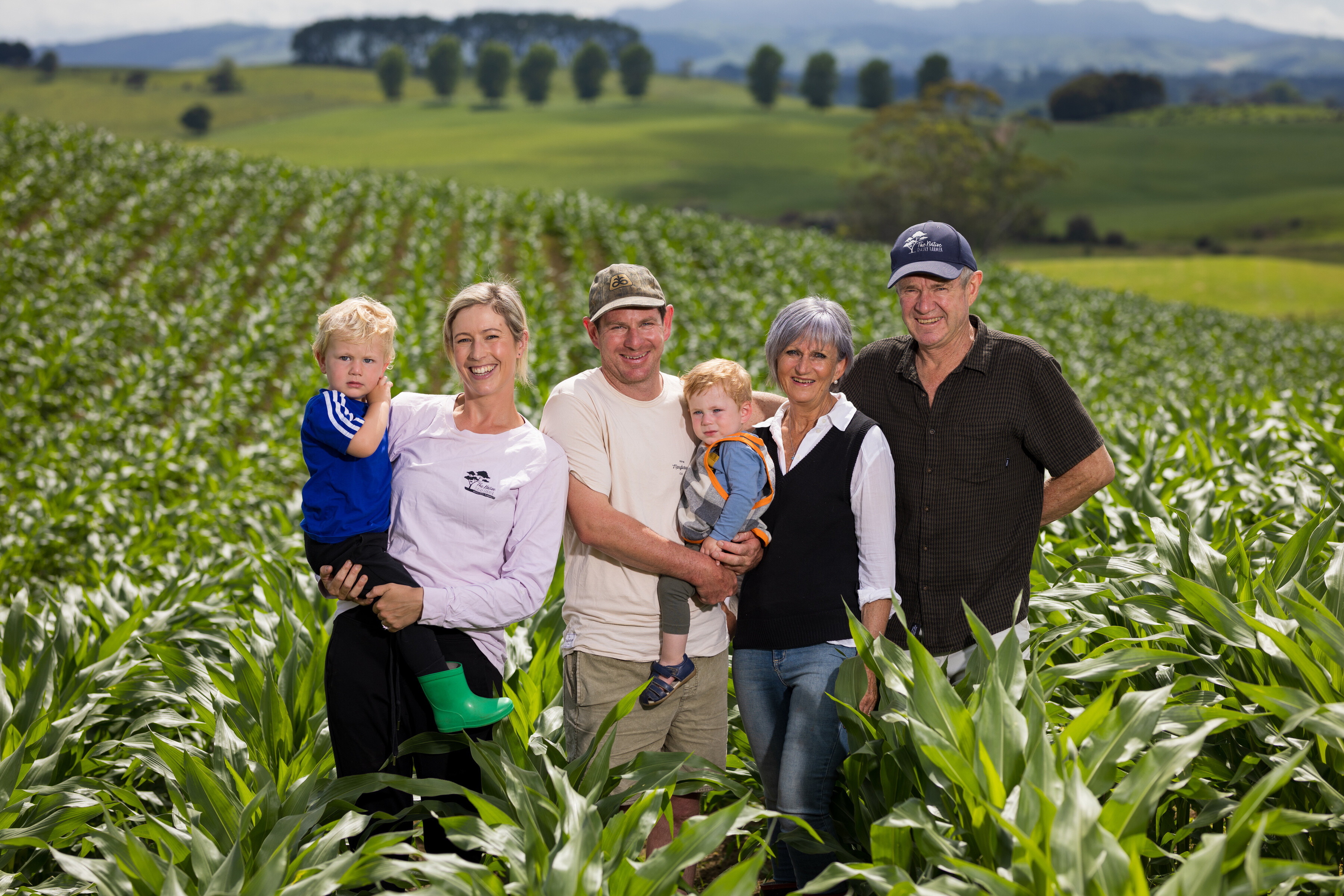
Pictured above: Walter, Alice, Dave, Rex, Deb, Phill Swney
This season, both herds started on twice-a-day milking, with the young herd moving to once-a-day after Christmas. The farm’s summer milking schedule is unique. Cups go on at 5:30 am in the mornings, and the older herd is grazed in nearby paddocks and milked again at 1 pm.
“Research has shown you don’t compromise production as long as there is no more than 18 hours between milkings” says Dave. “Lunchtime milking seems to suit both us and the cows well”.
In the autumn, maize silage is coupled with palm kernel and grass silage to extend the lactation and meet cow condition and pasture cover targets by drying off.
Four years ago Alice, who was formerly a Senior Catchment Officer with the Waikato Regional Council, turned the tennis court into a successful native plant nursery trading as The Native Dairy Farmer. As well as creating non-farming income, the nursery allows her to spend more time with their sons Walter (2) and Rex (1).
Dave, who is on the Smaller Milk and Supply Herds (SMASH) Trust and National Committee, enjoys the hands on aspect of a family farm and has no real desire to expand the operation. Instead, the couple plan to consolidate their current system by focusing on efficiently increasing pasture and crop harvested and per-cow production. Adding value to the farm by further native plantings, including shade trees, is also a priority.
While his top focus is growing and harvesting as much high-quality pasture as possible, Dave believes maize silage will continue to play an important role in his future farm system, especially as the climate becomes more challenging.
“It’s a great base feed that works extremely well with pasture and helps us maximise the amount of home grown feed we harvest” says Dave. “I’d like to feed a bit more and rely less on imported feed”.
Listen to the Swney's full story on the Feed for Thought podcast: