
Farmer Testimonials
Chris and Rachel Numan
For Chris and Rachel Numan, building a profitable and resilient dairy system has always been about getting the fundamentals right and then refining them over time.
The couple, who have two sons, Jack (8) and Oscar (6), farm 190 effective hectares at Pokuru, near Te Awamutu in the Waikato. In the 2024-25 season their 700 cow Kiwi-cross herd produced just over 346,000 kgMS, equating to around 1,820 kgMS per hectare and approximately 500 kg MS per cow.
The farm sits firmly in the System 4 to 5 range, with pasture as the foundation. “Pasture is always the key focus for us” says Chris.
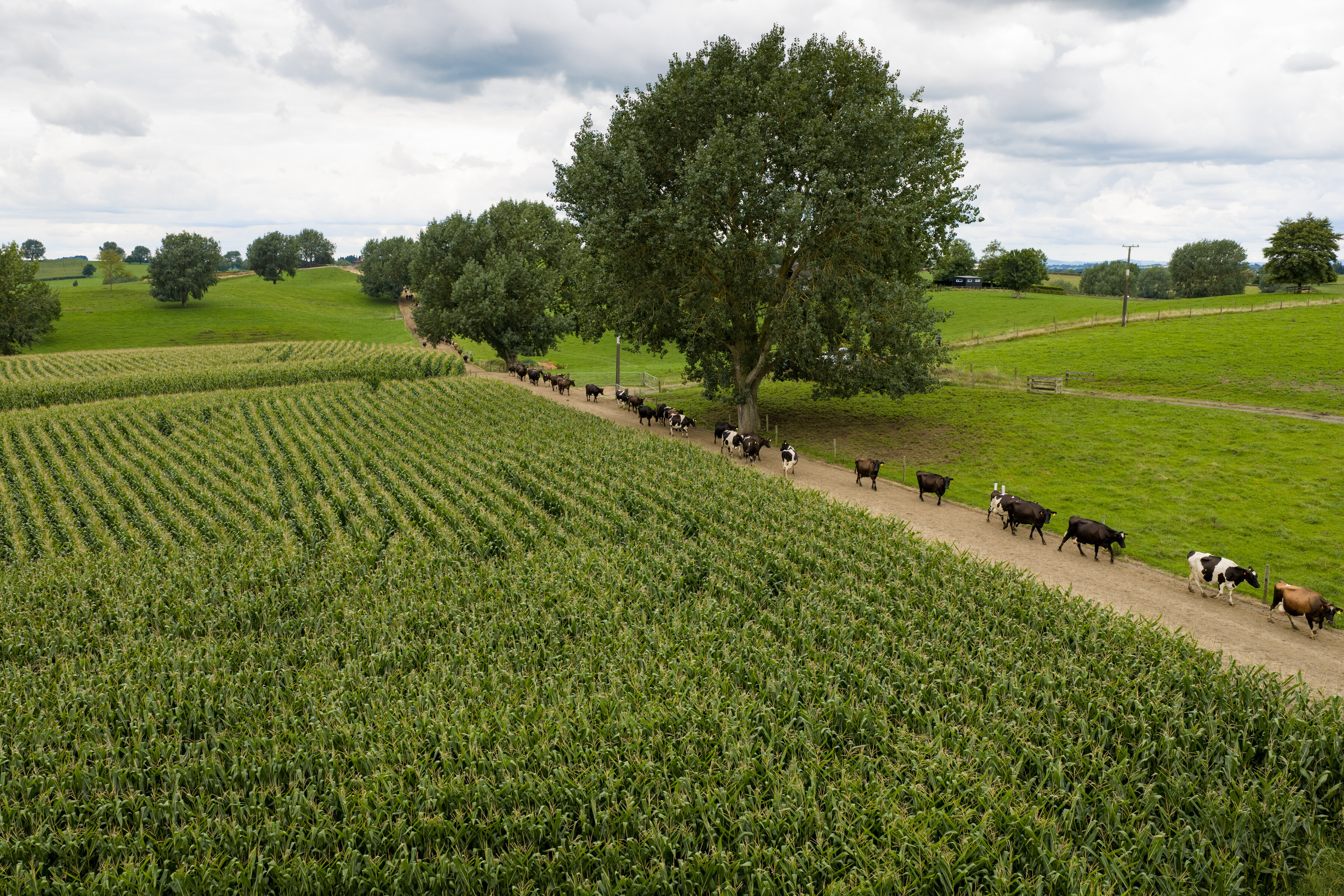
“Supplements are used to complement pasture not replace it”. Chris has used maize silage “pretty much my entire farming career”. Over time, it has become one of the core feeds underpinning production, cost control and animal health. Currently the farm feeds around one tonne of maize silage dry matter per cow per year. Some of that is contracted in, while increasing volumes are now grown on farm, particularly on paddocks with poor pasture persistence or heavy effluent history.
“For us it’s about having a base supplementary feed” Chris explains. “It allows us to keep our production stable on a year to-year basis. There’s not much movement in there, maybe between three and five per cent”.
While the herd is spring calving, late calvers and some of the best empty cows are milked through the winter months, which means the farm milks year-round.
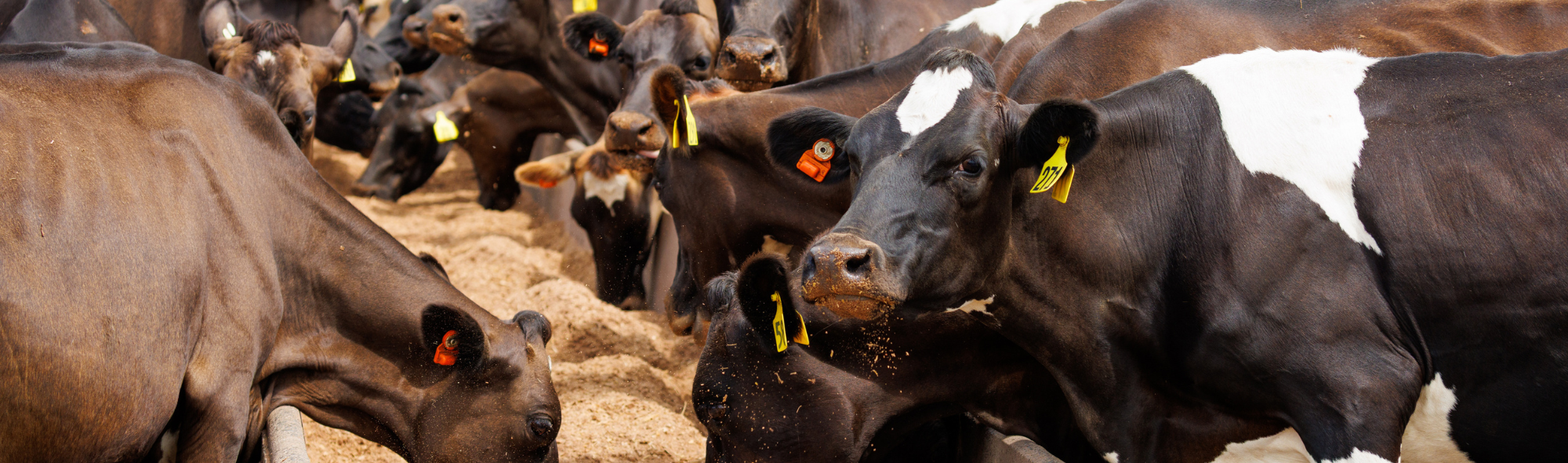
Transition cows are fed around 5 kgDM of maize silage as part of a dietary cation anion difference (DCAD) based transition diet, a practice Chris says has contributed to a marked reduction in metabolic issues. “Since we started that probably six to eight years ago, we’ve hugely reduced our milk fever”. After calving, maize silage is fed on the feedpad in a mixed ration, which includes palm kernel expeller (PKE) and maize dry distillers’ grain (golden DDG) if required for protein.
Typically, the maize silage bunker is closed in November once pasture growth rates outstrip demand and opened again in the summer once the feed deficit exceeds 4 kgDM per cow.
While PKE has played an ongoing role in the farm's supplementary feeding regime, a recent challenging dry season has led the couple to reassess how much they feed as part of the planned programme.
“We fed a large amount of extra PKE to get through the drought last year and as a consequence, we lost a couple of cows at dry-off to copper toxicity” says Chris.
Reducing reliance on high PKE intakes while maintaining energy supply has reinforced maize silage’s role in the system.
“We know what it costs us, and we can use it at a range of feeding rates to supplement any animal on the farm whenever we need to” says Chris. “That’s definitely an advantage in a system that’s designed to deliver stable year on year production”.
Two years ago, Chris planted maize in some of his poorest performing pasture paddocks, relying solely on effluent nutrients to feed the crop. “We grew a 28 tDM/ha crop on those paddocks with no fertiliser added whatsoever”.
The result exceeded expectations, not only in terms of yield but also in pasture recovery. “My aim was to improve pasture persistence. The maize was kind of secondary”.
The paddocks came out of maize into grass and held up well through the following dry season. “That sort of sealed it for us. If we can continue to target poor pasture paddocks and get high maize yields with no fertiliser, then growing on farm is highly profitable for us”.
For on-farm crops, Chris is looking for a maize hybrid that will deliver yield stability and handle high wind levels.
“The farm is on a high point in the area between Mt Pirongia and Mt Kakepuku” says Chris. “When the wind comes through, we bear the brunt of it”.
For the past few seasons, Chris has planted Pioneer® brand P9978.
Beyond genetics, ongoing support has been a key factor behind the couple sticking with Pioneer.
“It’s a reputable brand and the support from the Pioneer team over the years has added a lot of value to our business”. Chris and Rachel came to the farm in 2012, entered an equity partnership in 2018 and bought the farm at the end of May 2025, completing a long-term goal that began when Chris left school.
“Buying the farm was a huge milestone. It’s been the key goal since I left school”.
As well as rearing calves, Rachel brings a unique skill set to the business. A trained veterinarian, she provides in-house animal health support, AI services and pregnancy testing, reducing costs while lifting performance.
“Having an on-farm vet is awesome. It’s very complementary to the system”.
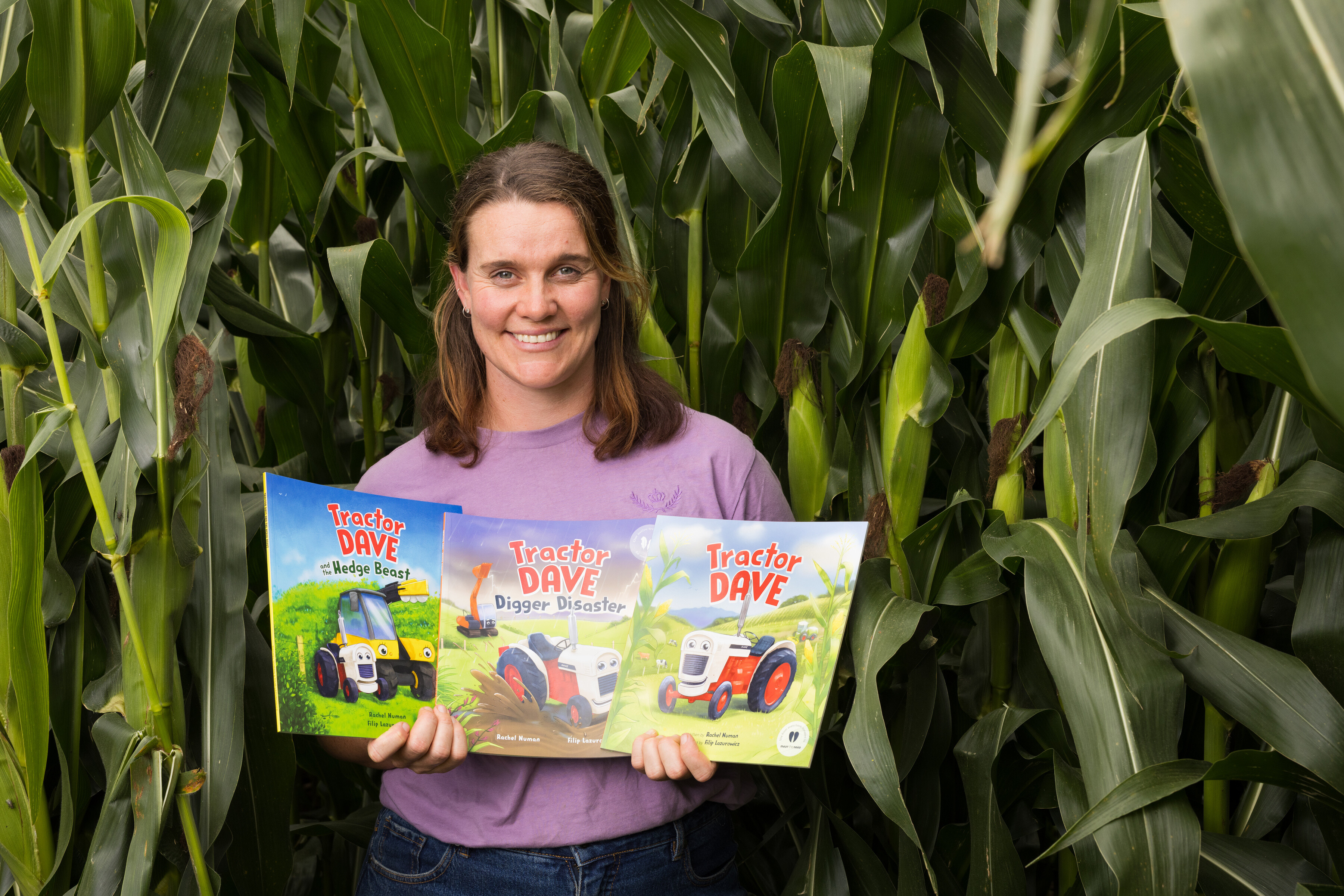
Rachel is also the author behind the Tractor Dave children’s book series, inspired by life on their dairy farm. What began as stories for their sons has grown into a nationwide initiative supporting food security and environmental projects.
While the farm’s financial success has helped the couple achieve their dream of farm ownership, family balance plays an important role in future planning. The recent integration of CowManager into the system has helped remove the reliance on Chris being in the shed or carrying out heat detection for the entire mating period”.
“We’ve got young kids, so we are trying to simplify the system, so we don’t miss those golden years”. With full ownership achieved, the focus now is on consolidation, system refinement and sustainability. Maize silage remains one of the key components of that approach, delivering cost control, animal health benefits and flexibility in a system designed to perform across seasons.
“That’s where maize comes in now” says Chris. “It helps us meet production targets, manage cost, and keep the system stable”.